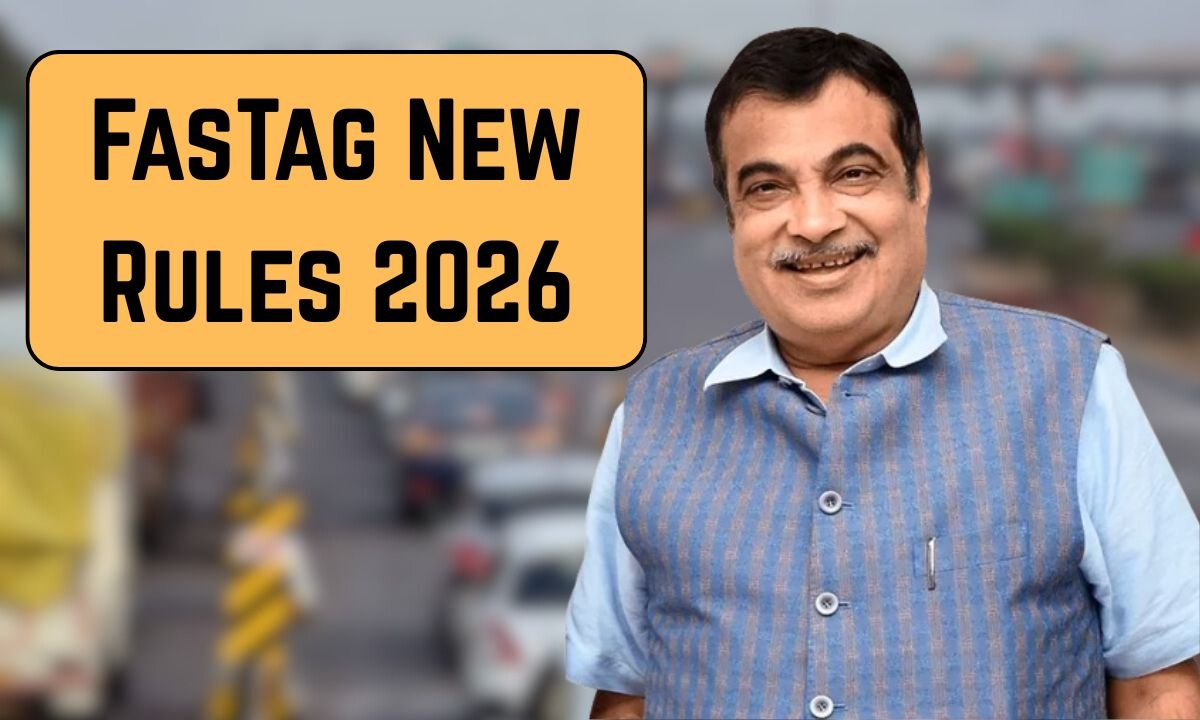
FASTag New Rules 2026: How Digital Tolling Saves Time & Money Imagine reaching a highway toll plaza during a busy weekend. Long lines, slow cash payments, and impatient drivers used to be a common sight. Over the past few years, electronic toll collection has changed that picture dramatically. Now, the FASTag New Rules 2026 are taking the system one step further by making toll payments faster, simpler, and almost completely digital.
Here’s the thing. India already has one of the highest FASTag adoption rates in the world, with more than ninety-eight percent of vehicles on national highways using it. Because of this massive shift toward digital tolling, the National Highways Authority of India has introduced several updates in 2026 that affect how drivers obtain and use FASTag.
Faster FASTag Activation Without Extra Verification
One of the most noticeable changes under the FASTag New Rules 2026 is the removal of the repeated Know Your Vehicle verification for private vehicles. Earlier, some users had to upload documents or photographs even after their FASTag was activated, which created confusion and delays.
From February 1, 2026, the process became much simpler for cars, jeeps, and vans. Instead of repeated checks after activation, the issuing bank now completes verification before issuing the FASTag by validating vehicle details directly through the VAHAN database. Once the tag is activated, drivers generally do not need to go through routine verification again unless a specific issue or complaint arises.
This change makes the process smoother for new vehicle owners and reduces unnecessary paperwork for existing FASTag users.
Cash Payments at Toll Plazas Are Ending
Another major update in the FASTag New Rules 2026 affects how tolls are paid on national highways. Starting April 1, 2026, cash payments at toll plazas on national highways are being phased out. Drivers are expected to pay toll charges through FASTag or digital methods like UPI.
This change applies to more than one thousand toll plazas across the country. The idea is simple: eliminate slow cash transactions and allow vehicles to pass through toll gates more quickly. Digital tolling also helps reduce congestion, especially during peak travel seasons and holiday traffic.
For drivers without a working FASTag, some plazas may allow UPI payments, though the fee may be slightly higher than the standard toll rate. Vehicles using cash in restricted lanes earlier often paid double toll charges, and the new rules strongly encourage a fully digital system.
Important FASTag Usage Rules
Even though FASTag has become common, drivers still need to follow certain rules to avoid penalties. The tag should always be placed correctly on the vehicle windshield so that toll scanners can read it instantly.
Drivers must also maintain sufficient balance in their FASTag wallet. Most issuing banks require a minimum recharge amount starting around one hundred rupees, while the maximum wallet limit depends on the KYC level of the account. For limited KYC accounts, the balance limit may be lower, while fully verified accounts can hold much higher balances.
If a FASTag is not working or is incorrectly placed, the toll plaza system may not detect it properly. In such cases, drivers may be charged higher toll fees, sometimes even double the standard amount.
Why These Changes Matter for Drivers
The goal of the FASTag New Rules 2026 is to make highway travel more efficient and reduce waiting times at toll plazas. With verification now simplified and digital payments becoming mandatory, the entire toll collection system is expected to operate more smoothly.
For drivers, this means fewer queues, faster toll crossings, and a more predictable travel experience. It also supports India’s broader push toward digital payments and modern transport infrastructure.
If you frequently travel on highways, it is a good idea to check that your FASTag is active, properly placed, and linked to a bank account with sufficient balance. You can monitor your tag status and recharge it easily through bank apps, the My FASTag mobile application, or the official FASTag portal.